Deep Sea Diet
A penguin's anatomy is hyper-optimized for one singular purpose: hunting efficiently in a three-dimensional liquid void. What they catch, and how their bodies process it, is entirely foreign to terrestrial biology.
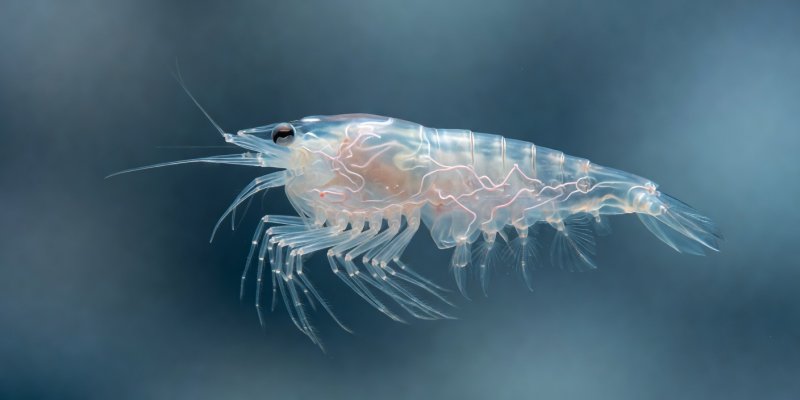
The Engine of the Antarctic
Antarctic krill (Euphausia superba) make up the vast majority of the diet for species like the Adélie and Chinstrap. These small crustaceans form massive swarms that can stretch for miles. The pinkish tint of penguin guano in these colonies is a direct result of the astaxanthin pigment found in krill shells.
Hunting Bioluminescence
When Emperor and King penguins dive into the abyssal zones, sunlight completely disappears. Here, they hunt myctophids (lanternfish). These small fish produce their own light via bioluminescent photophores.
Visual Adaptation
Penguin eyes contain highly specialized retinas dominated by rods, making them incredibly sensitive to the faint blue and green light emitted by their glowing prey in the pitch-black depths.
The Supraorbital Gland
Because their diet is pulled directly from the ocean, penguins ingest a massive amount of saltwater. To avoid lethal sodium toxicity, a gland located just above their eye socket filters salt from the bloodstream. They then literally sneeze out the highly concentrated brine through their nostrils.