Frigid Habitats
While popular culture imagines all penguins living on featureless blocks of ice, their habitats are incredibly diverse and rugged. They navigate environments that act as nature’s most extreme endurance testing facilities.
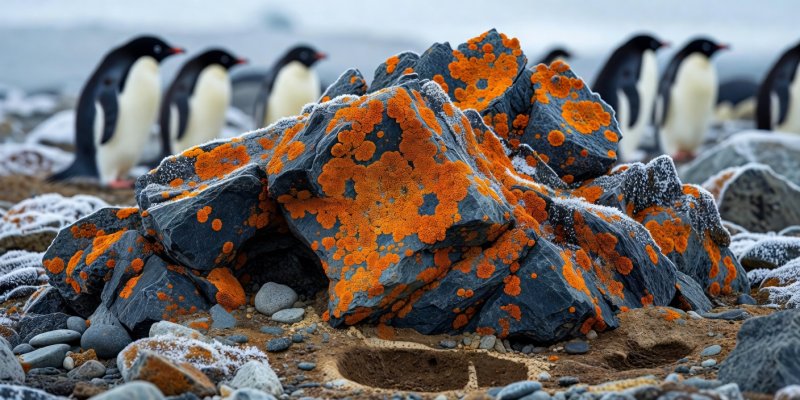
Living on the Edge of the World
The Ross Ice Shelf is the largest ice shelf in Antarctica, roughly the size of France. Emperor penguins utilize the fast ice—sea ice that is "fastened" to the coastline or ice shelf—as their breeding grounds. This terrain is flat but incredibly treacherous, constantly subjected to katabatic winds that roar off the polar plateau.
Tussock Grass and Basalt
Moving north from the solid ice, species like the Macaroni and Rockhopper penguins breed on rugged, sub-Antarctic islands such as South Georgia and the Falkland Islands. Here, the landscape is defined by sheer basalt cliffs and dense tussock grass.
The Rockhopper's Ascent
These habitats lack the flat ice favored by the Emperor. Instead, Rockhoppers use sharp, strong claws and heavily muscled legs to literally hop vertically up steep, wave-battered cliffs to reach their nesting sites high above the churning sea.
Terraforming the Nest
In massive colonies, the sheer volume of penguin guano (excrement) chemically alters the rock and soil below. Over centuries, these deposits create unique micro-habitats, supporting specialized species of algae and microscopic mites that can exist nowhere else on the continent.